I proudly present to you the latest 1994 car to be released. Going against the trend, set by myself, I've not done the Australian GP car, but I've gone back to the Spanish GP for this one.
Minardi started the 1994 season with an interim car, which was the reasonably successful 1993 car updated for the 1994 season, designed by Aldo Costa and Gustav Brunner. The team merged with BMS Scuderia Italia as the smaller teams began to struggle for cash to survive, but it wasn't until round 6, the Canadian GP, when the new M194 was completed. Still, the old car, in the hands of Pierluigi Martini scored points, with a fifth placed finish at the Spanish GP.
In the released mod, you'll find a quick update to the existing Minardi M193B. Not content with that, I wanted to update the shape a bit more, which was started out as a quick car loosely based on the 1993 car by Oggo. It was going to be a quick job, which the shell was... and then I got to the detail.
Now I wanted to honour the original work, so I'm not replacing any cars in the first four GPs, so in reality, making this car was only for the one race. To reflect that, this car is ridiculously over engineered. My reasoning is that some of the parts made for this car can go into the M194 at a later date.
The wheel hub assembly and some suspension parts on my Benetton released earlier this year was actually recycled off this car.
Moving towards the cockpit, the mirrors are much more rounded than my previous models. The visor is much more sculpted and I've managed to figure out how to stop the glass from flickering in game. The cockpit has more details in, again with more polygons than some of my earlier 1994 models.
1994 Minardi M193B by Fongu
As with my other cars, I will make an internal cockpit version of this, again at a later date. However with all the effort I've been putting into the cockpits, it wasn't that easy to see in-game, so I've been playing around with the external camera positions to make it a bit more realistic, and also show off some of the cockpit details on this car and others... expect that in an updated 1994 mod in the not too distant future.
1994 Minardi M193B by Fongu
Unlike my other 1994 cars, this car got the full internal details treatment. The Lotus had half an engine, but here I've created a lot more detail. Consequently, the 3D model is way beyond the limit that GP4 allows. It took me a while to find a way to get this car running in GP4 properly and so was left gathering dust for many months. I toyed with the idea of a poly-crunched version of the engine and gearbox, but in the end I managed it.
A while ago, I had the idea of using different scenes, similar to how tracks are made, and I realised that the face/vertices limit in GP4 is per scene. So with multiple scenes, meant multiple times more polygons per car. However, it came with quirks, namely that it was flickering, it came off when you damaged the car. You'll notice odd things coming off the cars, including the driver body, unfortunately that's a limitation of GP4, but it's one I can live with. With the Williams FW16B, there was only a small part assigned to another scene, it's a hidden part so it didn't really bother me, but with this Minardi, I had to put the whole engine and gearbox (over 30,000 polygons) in a new scene. Overall, it is just over 75,000 faces.
I discovered the flickering was an issue of my own making. Previously I had exported from zmodeler into two separate .gp4 files and then merged them in GP4 Builder. Instead, if I exported the whole thing in Zmodeler, exported the extra object in GP4 Builder, create a new scene and import it back in there, that fixed the issue. This is also possible and working with Oggo's Blender plugin where the same process can be done there.
1994 Minardi M193B by Fongu
The result is that good ingame, here is the car smashed up to expose the internal parts. Sadly it comes flying down the track as damage, but at least it's working as it ought.
1994 Minardi M193B by Fongu
Just a quick note to say that this car shares the same carbon file as the Benetton B194.
Thanks to Oggo and Carl_gpgames for the additional screenshots, their work on the Blender plugin and associated issues was what motivated me to get this car finished and working. I also want to give a quick shout out to the ASR Formula team, who make excellent cars from the 1990s for Assetto Corsa, and their beautiful and exquiste models are, in part, an inspiration for the detail that's gone into this car.
This is an updated
Work in Progress release of my 1994 McLaren. I have put the basic livery on the
car, and I’ve done a quick AO map, baking shadows onto the shape. The car has
changed since I done the shadows, like where I’ve moved the camera forward, so the shadows need
updating but it’s a start. **update, I've fixed this now*** There's been some small updates on the car too.
EDIT: the complete car is available here
I've also reuploaded a mirror to Loren's late season MinardiM194 which includes a mid-season French GP version and a Hungarian GP version. These are all excellent low poly updates, maybe one day I will get around to doing a higher quality version.
Minardi had an all new driver lineup after several drivers were used the previous campaign. Ukyo Katayama joined after 4 years at Tyrrell, bringing Mild Seven sponsorship with him, and reigning F3 champion, Jarno Trulli. When Trulli was promoted to Prost half way through the season, Tarso Marques rejoined the team in the second seat. Though helped on occasion by the better Bridgestone tyre, the underpowered Hart engines meant the the car struggled around the back of the grid.
I personally really liked the 1997 Minardi for some reason, with a slightly refined version of their previous M195/M195B and the addition for yellow in the colour scheme.
Onyx's shape is pretty basic, but I think it's one of their better ones. They produced some nicer 1997 cars in my opinion compared to some of the lows of previous years. Minardi ran a tiny extra flip up on the front wing endplate, which is at least acknowledged with a square bump in this model. The nose is a little bulky and could be better defined, but it includes the wing just in front of the suspension. The sidepod and engine covers have a reasonable enough shape, perhaps a little oversimplified and the rear wing is also nice enough for a budget model. Onyx have generic cockpits and generic dashboards, but they do include a nice bump in front of the cockpit and a nice aerial on the monocoque. Onyx cars are not going to score highly against the likes of Tameo, but for an Onyx car, this really isn't bad at all.
Tameo have recreated the Italian GP version, with it's skinny wings and reduced aerodynamic appendages. Obviously the Tameo model has much more details than the budget diecast version by Onyx, but their attention to detail is second to none and they've really nailed the shape. It would be nice to get a higher downforce version, but I'd be more than happy with this model. Score: 9/10
Minardi wanted to signify a new era for the team with the new chassis numbering, the M01. Luca Badoer returns to the team, having previously driven for them in 1995, and was joined by Ferrari test driver, Marc Gene in his rookie season.
The car remained near the rear of the grid, frequently battling with the Arrows team. Badoer damaged his wrist at a test session crash and was replaced for one race by Stephane Sarrazin but span out of the race.
At the European Grand Prix at the Nurburgring, Badoer was running in fourth place in his Minardi when his gearbox failed with 13 laps to go and the Italian reduced to tears at the side of his car. But teammate Gene secured sixth place to secure Minardi's first point for four years.
The team equaled Arrows' points haul at the end of the year, but lost out on countback meaning they finished 10th in the Constructors' Championship, one place ahead of the more competitive and better funded debutantes, BAR. I still find it funny that BAR said they could win and didn't score a point when Minardi did!
This car was the first Formula 1 car that Fernando Alonso drove before joining the team in 2001.
For some reason, Minichamps didn't have the rights for Luca Badoer's name on the cardboard inlay, but they were able to reproduce his helmet with no issues. I wasn't particularly keen on the silver liveries that Minardi went for in 1998 and 1999, I much prefer the yellow black and white of the 1997 car or the yellow on their 2000 car. To the model itself and it's another pretty accurate model from Minichamps, I like how they have added the extra padding on the headrest behind the drivers helmet. Not much to complain about on this car. Score: 7/10
This is based on Marc Gene's point scoring car at the European GP. I hadn't notice before that they changed the nose on this car mid-season, it was a lot shorter and had the front wing supports angle forwards as it drops to the front wing. Another stunning model from Tameo, Score 9/10
In the second part of the walkaround of my 1996MinardiM195B, I want to talk about some of the details of the car and show some of the insides of the car that you perhaps don't get to see when you race it in game.
I like the front end of the Minardi, largely unchanged from the 1995 car, with its anhedral front wing supports, to the large fin that comes out the rear of the front wing, and the curve of the underside of the nose I quite liked as well. The front wing on this model is pretty basic, the only real detail on it is the gurney flap on the top surface. There are actually two fins underneath the front wing, there aren't too many photos that show them, but one is covered from this angle, the other acting like a bargeboard. This idea appeared on some early 90's Footworks, and you can see another angle a bit further down.
This was my first proper go at doing bodylines in 3D. One of the things I had started to perfect was being making effective use of polygons, not using too many on big flat surfaces, but instead concentrating them around curves. This gives smoother normals. So introducing bodylines took a little bit of experimenting with before I found a happy technique.
If you take away the nose cone, you can see some of the elements underneath the main surfaces. If you crashed the GP4 car hard enough, these parts become exposed, and I didn't want to put too much effort into it, but just a bit of detail as an easter egg if those parts came off in game. This is the only car where I have modelled this, though I did do parts of it on my 1994McLaren.
If you've been following my Work In Progress shots of the 1994 Williams, you will see that I work on one half of the car and then mirror that towards the end. So apologies that you can see some gaps where I haven't joined the two parts together.
Here, you can see another angle of the front wing and the fins underneath that I mentioned. I started putting a bit more effort into the cockpit, particularly the dashboards. Whilst the dashboards were pretty generic in the 1995 mod, they are closer to the real thing in the 1996 cars.
New for 1996 was the side-head protection which was made mandatory on all cars, though Sauber had run their own version since the middle of 1994. Minardi's were particularly high. Perhaps you can't see it clearly in this screenshot, but I modelled the dint between the carbon fibre chassis and the soft head-rest. As the side head protection merges to the engine cover, that was not easy to get right, particularly as I had to put a bodyline through the middle of it, but I'll come back to that later. There's two small inlets just in front of the sidepods, which I think look better in 3D.
As you can see, with the body line modelled in 3D, you can actually remove the whole engine and sidepod cover to reveal the generic engine and gearbox. Because it was generic, that's why it's got a Renault engine in it, even though we all know it should be a Ford. As we go through the other cars, you will see this area become more tailored to the actual cars.
Moving towards the rear of the car, there is quite a basic diffuser. Adding the cable just before the front suspension just adds a bit of detail to this area. I enjoy the various ways in which the lower rear wings are attached to the chassis, it often produces some nice curves to model. The rear wing endplate itself as an indent on the leading edge around half way up - this was unique to Minardi. Also unique to Minardi was that winglet they had attached to the rear wing. Though it wasn't pretty, it gave that additional distinctiveness to the M195B.
For my final screenshot, I wanted to show a bit of the wireframe, as you can't quite see the detail with the dark blue. You can see how the rear of the side-head protection slopes off, reminiscent of some of the modern day F1 sidepods. There is quite a bit bump at the rear of the engine cover. At the rear of the car, there is another indent in the centre just in-front of the rear wing.
With the wireframe, you can see how I don't put too may polygons on the top surface of the sidepod, but around they are denser around the curves, and this just helps make the light shine off the car nicely as well as making the environment maps (reflections) appear better - though they aren't perfect in GP4.
I was learning a lot about modelling, and I still am, constantly trying to improve my skills and my 3D models. Having been a big part of bringing updated cars to the 1995 mod, and wanting to focus more on retro mods than modern day cars at the time, I decided to start on the 1996 grid. Because I knew that I would continue to improve my modding skills, I decided if I started at the rear of the grid, the ones nearer the front will be the best cars of the mod, that was the theory anyway.
The Minardi M195B was actually the second car that I did for 1996. The real car being an updated version of the M195, the 1995 version of the car was where I started for proportions, though no part of the 1995 car made it onto the 1996 model.
1995 Minardi M195
By the time that the 1996 cars were mapped and painted, I had departed from GP4, so I wasn't able to communicate effectively about some of the details I had put into the shape and how I envisioned they would be painted. This one was painted by Celinho.
At the time, I wasn't confident enough to create my own suspension, so the brakes and suspension on this car are taken (with permission) from Nick Ovey's 1995 Jordan. It also contains the generic engine and gearbox from the 1995 mod too. That's partly because there are not that many photos around of the insides of this car, and at the time, I was more concerned about the main body of the car.
I suppose I was using the Haas approach to F1, taking parts from existing cars and focusing on the aero surfaces.
I also find the rear ends of cars difficult to model, because most of the photos from race weekends are under shadow, so you can't see what you are to model. These days, if the cars are still around at demos or being displayed, you get some better high resolution pictures, but back when I was making some of these lower end cars, I had to use a bit of artistic license.
Overall, I'm pretty happy with this car. When you put effort into the details, its easy to lose the perspective of the overall proportions of the car, I feel I managed to add detail whilst maintaining a good basic shape. The 1995 mod for example had different authors, so each author produced cars to their own perceived scales, so simple things like the heights of the rear wings (which by regulations is a constant) varied a lot in the GP4 mod. So I wanted to make sure that there was a consistency in the cars that I created for the 1996 mod.
To stop this post from being too long, I will drill into the detail of this car in the next post.
In the meantime, you can see a conversion of this in rfactor 2 in the video below:
In 1996, the cash-strapped Minardi team ran an updated M195, dubbed the M195B. For the new regulations, the car had high cockpit sides to protect the driver's head in an accident. Pedro Lamy was joined by three teammates throughout the year, Giancarlo Fisichella, Tarso Marques and Gianni Lavaggi. The car, perhaps unsurprisingly, did not score any points, but fared better than fellow minnows, Forti, with a best placed finish of 8th in the hands of Fisichella at the British GP.
Onyx produced an updated model with the high cockpit sides, the more conventional sidepods with the attached winglet. One nice detail on the rear wing endplates is the indent about half way up. What is missing is the flap/turning vane underneath the front wing heading under the front suspension. The nose is a little bit bulbous. But I like how they've made the engine cover including the bump just at the end of the Doimo logo. Not too bad for a cheap-end model. Score: 6/10
You'd expect that Tameo would produce a much nicer model than Onyx and this is no exception. This also includes the additional winglet that sprouts from the upper rear wing, which also has multiple elements - nice. The nose is nicely defined, it includes the flap/turning vane underneath the front wing, and the detail is nicely modeled.
Minardi started the 1994 season with an updated version of their 1993M193. The car was used up to Spain, scoring points at Monaco and Spain. The livery was a lot more colourful than the previous year where they had a white car with black wings. It's nice to see a car full of sponsors, though it's pretty hard to find out what they all actually were. Michele Alboreto and Pierluigi Martini were its drivers throughout the season.
The M194 debuted at the Canadian Grand Prix, and scored points in France, but that was it for the points scoring that season. In fact, they scored more points with the M193B.
The Minardi team actually joined forces with the BMS Scuderia Italia team, and you can see the Lucchini logo on the sidepods indicating the partnership. But the team began to struggle for finances, and slipped from a midfield team towards the back of the grid in 1995.
The Minardi is the only car I have not had in my collection from the 94 season, because they only come in kits, and I don't have the time, patience or dexterity to put together a small model to the standards I'd be happy with. They are also quite rare to come by and thus prices are very high for a nicely hand built model.
In a departure from my usual GP4 cars and model reviews, I wanted to write a quick article about one of the crazy aspects of the 1994F1 season, the large number of serious crashes.
The new 1994 regulations that banned 'driver aids' was rather rushed in, and the rules were particularly ambiguous (vague), which meant that the FIA had the casting vote to rule in any specific case as to whether parts of the car were legal or not. These days, the rules tend to be better thought out, and teams can consult the FIA, Charlie Whiting in particular, as to the legality of its parts before they participate in a Grand Prix. But in 1994, it wasn't short of teams who were 'trying it on', chancing parts would be legal on the basis of the ambiguity in the rules.
The drivers, who had been used to high levels of grip from driver aids, and fat rear tyres in previous seasons, were regularly caught out by the combination of high speeds and a lack of grip of its newer models. The result is that there were a number of large crashes at the beginning of the season, that should have given the FIA warnings to make changes before there were any serious injuries. Interestingly, Senna was quoted as saying that without any changes to the speeds of the cars, it would be "a season with a lot of accidents". Unfortunately, that would be true and it would be the deaths of Roland Ratzenberger and Ayrton Senna at Imola, and Karl Wendlinger's crash at Monaco that led to a host of changes to cars and tracks that began a renewed drive of improvement on safety in F1.
Frank Dernie explains that flat bottom cars are inherently unstable, and that active suspension was one of the things that helped bring stability, so by banning the system it made the cars unstable, and thus unpredictable. Aerodynamics that work fine in wind-tunnel are subjected to slides, and quick changes of directions, to roll and pitch and changes in wind and other factors that can cause loss of downforce, so when a car is so heavily dependent on its downforce, to suddenly lose it means it will cause high-speed accidents beyond the control of the driver.
I wanted to highlight the number of big accidents that happened, some lucky near-misses whilst others with memorable losses of life:
Shortly after signing for Benetton for the 1994 season, Lehto was testing on a damp Silverstone track in a 1993 car when he went off backwards at Stowe and injured his neck. The injury meant he sat out the first two Grand Prix, having yet to drive the B194. You can read more from his interview with Motorsport Magazine here:
At the Brazilian Grand Prix, Eddie Irvine, in his Jordan, and Jos Verstappen (deputising for Lehto in the Benetton) were battling as they came to lap Eric Bernard's Ligier, along with a slowing Martin Brundle, who had an engine failure in the McLaren. Irvine chopped across the track to overtake Bernard, without taking into account Verstappen was pulling alongside. Verstappen was left with no choice but to go on the grass, and spun as they braked for the corner. Verstappen's car went airbourne and his rear tyre hit Brundle's helmet, causing it to crack. Brundle was lucky to walk away from this accident (who also had another near fatal accident in the wet at the Japanese Grand Prix later that year, not too dissimilar to Jules Bianchi's accident some 20 years later).
Irvine was slapped with a fine and a one race ban, and after an appeal, the ban was extended to three races.
After the Brazilian Grand Prix, Jean was testing his Ferrari412T1 at Mugello, when he also went backwards into a barried and he also injured his neck, that caused him to miss two Grand Prix.
Rubens Barrichello had been on a roll, after finishing on the podium at the previous race in Aida. Barrichello entered the Variante Bassa some 15kph faster than the previous lap, went wide and hit the kerb on the chicane which sent the Jordan airbourne before hitting the barrier above the tyre barrier. Thankfully, this was not a fatal accident,
Roland Ratzenberger - Qualifying at San Marino Grand Prix
A front wing flap came off from the car, causing major suspension damage, which failed at 180mph sending Roland into the barrier in a fatal crash. A photograph, linked below, sees Roland tangling with the Footwork of Fittipaldi, which may have been the cause for the failure that led to him loosing control of his car.
JJ Lehto - Start at San Marino Grand Prix
Lehto returned from his accident into the cockpit of the Benetton for the third race in Imola, but he has since admitted that he returned too soon (more in the Motorsport Magazine link above). "When I came back I was sick and in pain; Flavio didn’t give me any testing."
Perhaps unfamiliar with the B194, the Finn stalled his car on the start as the rest of the field raced past him. All except Pedro Lamy in his Lotus who collided with the stationary Benetton, and debris, including a tyre, was sent into the crowd, injuring four spectators and a policeman.
Ayrton Senna - San Marino Grand Prix
Senna's accident, after the safety car period to clear up the start line crash, is still a topic of debate, and the cause remains not fully known. His WilliamsFW16 car is seen to hit a bump at the Tamburello corner and bottom out, with sparks seen from Schumacher's onboard camera, which was unlike previous laps. Perhaps behind a slow safety car, the tyres were not up to full pressure? The car then slides, with Senna seeming to over correct and he heads for the barriers to the right. We know his steering column was hastily modified before the race and it was found to have failed, but it is not known whether it was the cause or a consequence of the accident. The end result, though, is that Senna lost his life in this accident.
A touching point was that an Austrian flag was found folded up in his cockpit, with Senna hoping to dedicate the win to Roland Ratzenberger.
Michele Alboreto had just pitted, and back then, there was no pit-lane speed limit. His rear wing failed on his Minardi, and the accident caused his to lose a wheel which caused injuries to some of the Ferrari pitcrew. Alboreto's car came to a halt just outside of the pitlane. This incident caused the pit-lane speed limit to be introduced.
Karl Wendlinger - Practice at Monaco Grand Prix
Karl Wendlinger lost control of his SauberC13 on the downhill approach to the chicane. The accident put Wendlinger into a coma. Sauber responded by raising the cockpit sides of the car, something that was eventually implemented on all cars for the 1996 season.
Pedro Lamy - Testing at Silverstone
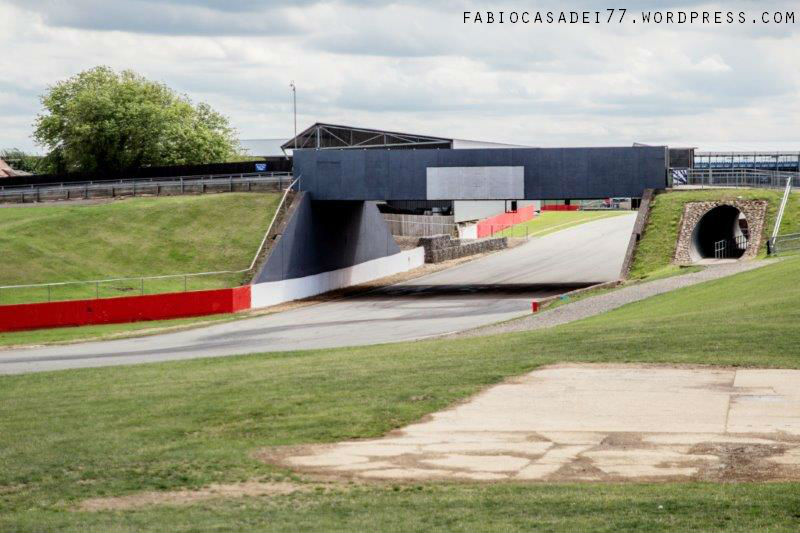
The FIA had begun to react by this stage, and a change to the diffusers were hurried into the regulations. This caused a spate of rear wing failures, with both Williams and Ligier reporting cracks on their assemblies. A rear wing failure on Lamy's Lotus caused an accident that strangely saw the car end up in the spectator tunnel at Bridge corner at Silverstone, pictured below. I've walked through this tunnel and it is small, so who knows what happened for the car to end up in there, but he managed to hit a barrier, clear a safety barrier and end up in the tunnel! Lamy's injuries to his leg would take nearly a year to recover from.
Reading Johnny Herbert's autobiography, he said he was a few hundred metres behind his teammate and as he rounded the fast left hander, all he could see was the engine and gearbox from the rear of Lamy's car strewn across the track. He looked further to see a hole in the fence, but still no sign of his car. A small flame caught his attention from the tunnel and there, Lamy was in his monocoque, partially exposed, sitting at an odd angle.
Simtek only ran one car out of respect at the Monaco Grand Prix. Andrea Montermini, who was suffering from a virus at the time, took up the second seat for the Spanish Grand Prix, although he never made it to the Grand Prix thanks to a massive accident on the last corner of the Barcelona track in practice. Thankfully, he only had injuries to his foot and a facial wound, but yet another massive accident in a season that has already had its fair share of them.
The aftermath
By the Monaco GP, F1 was under a lot of pressure from sponsors and manufacturers to get on top of these accidents, threatening to pull out of F1 and endangering the series altogether. It's debatable if Senna had never lost his life at Imola, whether the FIA would have felt the need to make so many changes despite the 10 other serious incidents.
A wide range of changes to the car were announced, though not all of them made it into the regulations before the end of the season, many of them phased in over the following Grand Prix. It meant that the teams at the lower end of the grid, already struggling with their finances, had to spend extra resources to simply show up and race legally. So the late season driver merry-go-round saw an influx of pay drivers racing in various seats towards the end of the season. Changes to tracks included temporary tyre barrier chicanes installed in Spain, Canada and Belgium.
1994, perhaps unsurprisingly, saw the most driver changes of any Formula 1 season, with 46 drivers taking part at some stage over the season, that's 40 driver changes! You can read about all the changes here:
Every now and again, I test myself on quiz website Sporcle to see if I can remember all the drivers from the 1994 season, only to usually miss out on one or two: www.sporcle.com