Showing posts with label Lagorce. Show all posts

Friday, 15 January 2021

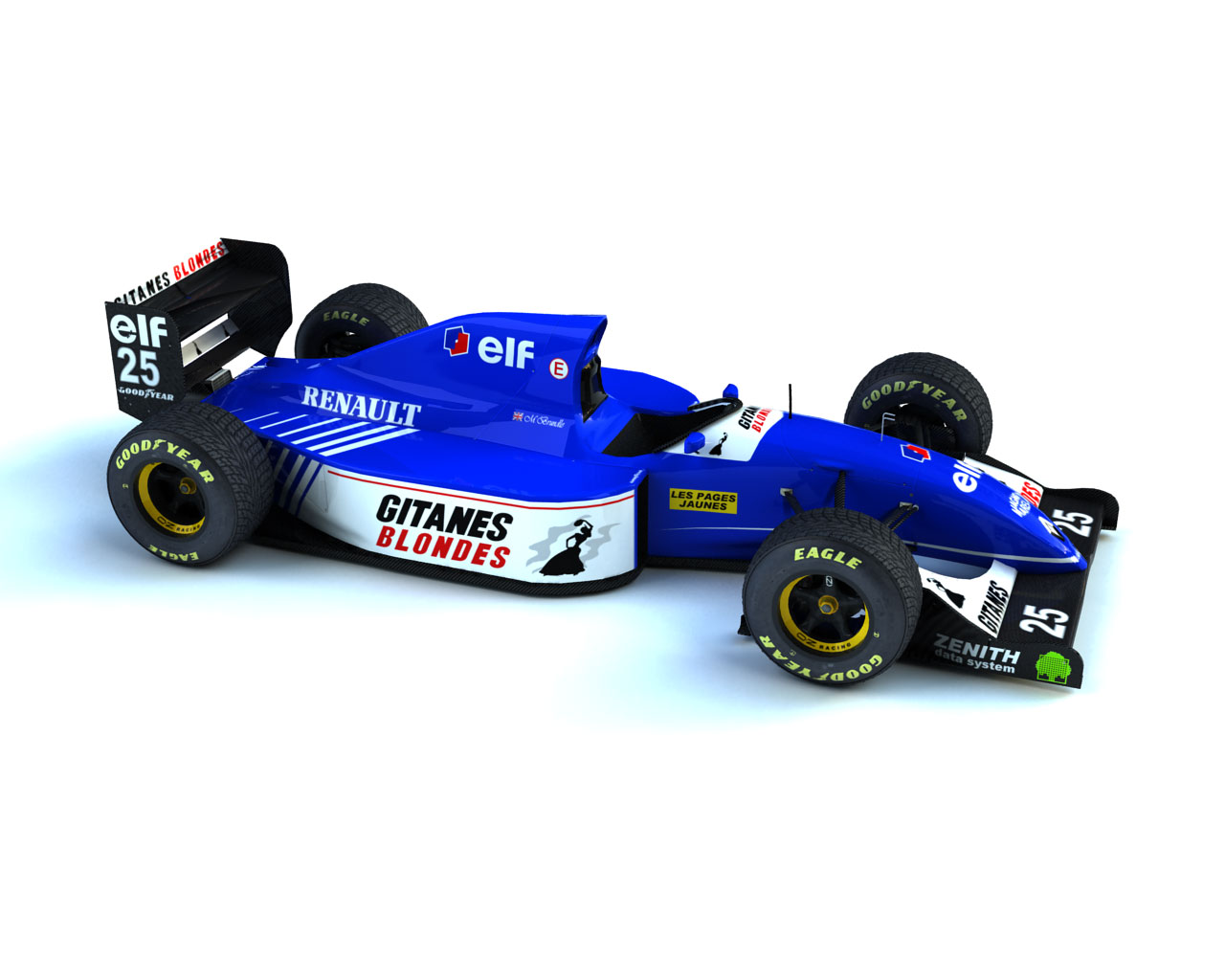
GP4: 1994 Ligier JS39B all the versions (preview)

Firstly a Happy New Year to you.

Since the release of my 1994 Ligier JS39B based on the Australian GP, I went back to the car to create the various little changes starting the Spanish GP, the fifth round of the 1994 season. The reason I started there is because the existing GP4 1994 mod has all the versions of each car up for the first four rounds. 

At the Spanish GP, rushed rule changes were brought to force to slow the speed of the cars down. This was the first Grand Prix where there was a speed limit and the mechanics had to remain in their pit-garages unless their car was due in for a pitstop. This was in response to Michele Alboreto's Minardi having one of his wheels come off after their pitstop, striking some mechanics, including Nigel Stepney of Ferrari, the Minardi car striking some mechanics on its way to a stand still. Watching footage of cars going full speed out of the pitlane looks so wrong nowadays. 

Anyway, to the car, and the obvious changes for Spain was that the front wing end-plates no longer extend behind the front wheel, and the diffusers were all cut down in size. Actually the teams arrived in protest, with various accidents occurring in testing due to the swift changes to these highly intricate aerodynamic machines. Basically it wasn't safe to rush these safety-induced regulation changes, which could create more crashes and injuries rather than less. It didn't help that Andrew Montermini had a huge shunt in practice, with his feet visible when the car settled down. 

Spanish GP

The cars continued with the new rules, basically because the poorer teams (i.e. almost all the teams on the grid bar the top four) had already cut up their old diffusers to suit the new rules and had no option to run them to the old rules. History lesson over, and here's the Ligier as it appeared in the Spanish GP. I have to admit, the mid-season diffuser that Ligier ran, I couldn't find any reasonable photos of it to be able to make it and the only source I had was from a 1/43 scale model, so it's running the diffuser as from the late end of the season. 

Canadian GP
More new rules at the Canadian GP, the main visible one being the hole in the airbox. Different teams interpreted this differently, with Ligier and Tyrrell perhaps being the most extreme and making their cars look like they were from the 1980s with just a rollover hoop. This version only lasted one race. 
The other minor change was the fuel cap is on the left hand side of the car. 


French GP

Back to Europe, the middle of the European summer, and it's the first non-tobacco livery of the year. Most the weekend, the team ran with all white sidepods, but decided on advertising their own team name in the Grand Prix itself. 

The engine cover received some work, with the holes now being at the rear of the engine cover, although the screenshot doesn't show it, it was one long thing hole along the back end of the airbox. Also a new rear wing assembly, a mid-downforce configuration compared to the previous two races. 

Being a French team, at a French track, Panis ran an onboard camera. 

British GP

A week later, the cars ran in the same specification for the British Grand Prix, albeit with amended non-tobacco livery and the fuel cap returning to the right hand side of the car. 

German GP

The German Grand Prix brought more rule changes. The car is higher, with a plank underneath - if you ran my GP4 cars side-by-side, you'll see that is the case with my cars. The car would feature much larger front wing endplates, this being the specification they will run for the rest of the season. 

As the Hockenheimring is a low-downforce track, I removed the gurney flaps from the front wing. The rear wing is also visibly much smaller, running just 2 elements on the upper section rather than the usual 3. 

The Ligier also had a completely new engine cover. The smooth bump around the Renault logo is now much more shrink-wrapped, with two smaller bumps rather than one big one. The hole at the rear is  now separated into two sections. 

Up to this race, the Ligiers were hopelessly slow, the only two things going for it was the Renault engine, the same as front-runners Williams were using, and the car had bulletproof reliability. Those were the perfect combination for the German Grand Prix, as many runners retired, Panis and Bernard earned themselves podium finishes. 

Hungarian GP

Onto Hungary, a high downforce, narrow twisty track, so on goes a big fat rear wing. The rear wings with an additional element that hung out at the front of the rear wing, common features on almost every car at the beginning of the year, were now banned. The rear wing on this Ligier looks like a barn door, there's so much of it! 

Perhaps after the success in Germany, the cars featured onboard cameras. The other change was the rear brake ducts, no longer are they the periscope ones, the new ones are much more neatly tucked away. Panis would earn another point at this race.

Ligier had actually agreed to sell the team, with Benetton's team principal Flavio Briatore and Tom Walkinshaw investing in the team at the beginning of the year. Flavio, over the course of the season, essentially handed the running of the team to Tom and his TWR team, eventually selling his stake over to TWR. With that arrangement, Frank Dernie, working at Benetton at the time, started working on the Ligier, so some of the solutions to the Benetton were mirrored by the Ligier team. The front wing end plates, the twin holes at the rear of the airbox and the triple rear wing with curvy lower elements all found their way onto the both cars. The cars would look near identical in 1995. 

The same car ran at Belgium, so nothing new to show here. It's interesting with the butchering of Eau Rouge, the team opted to stick with their ultra-high downforce configuration. 

Italian GP

Onto Monza, and another low downforce track. The team introduced their version of a three element rear wing, creating much less drag. Not much else to report in terms of changes and there was no repeat success for the real thing either. 

Portuguese GP

The rest of the season would see the car run in pretty much the same configuration, with the new high downforce version of the rear wing as mentioned earlier. Williams had pioneered the anhedral (triangular shaped) lower rear wing at the beginning of the year, allowing the ends of the wing to interact with the diffuser and also reducing drag. In turn, you do lose a bit of overall downforce, but I think they look pretty. Running with the additional middle element on the rear wing did allow them to run much less angle on the upper main plane. 


European GP

Race 14 was originally intended to be in Argentina, but the Buenos Aires track was not complete in time and the race was given to Jerez, the second Spanish race at the popular test track, dubbed the European GP. 

The team switched out Eric Bernard for Johnny Herbert, the Englishman becoming ever more frustrated at the Lotus team. But a good showing at Monza reminded us just what a good job he's been doing in a terrible car, and he was rewarded with a promotion to Ligier. Bernard would contest just one race for Lotus before being dropped for pay drivers. 

Herbert would beat his team-mate, the reigning F3000 champion of 1993, finishing just ahead of Panis in the race. Impressing the management with this performance, he was recalled to Benetton for a test and then a race seat for the remainder of the season. 

Japanese GP

With two races to go, test driver Franck Lagorce (because Eric Bernard hardly shone in his performances to recall him back I guess) was given the race seat. Panis ended the year with a fifth placed finish. Panis would end up 9th in the Drivers Standings, and the team finished 6th.

In case you missed it, v1 of the Australian GP car is available on this 

Friday, 11 December 2020

GP4: 1994 Ligier JS39B Australian GP Version download

Though the carshape was created back in October 2019, I finally got around to mapping and painting this car. Watch out for more versions of this car coming soon, but for now, enjoy the Australian GP version. 


Wednesday, 22 January 2020

Update 2 of 1/43 Model Review: 1994 Ligier JS39B Renault

Well I couldn't help myself to some new 1994 models, and with Spark and Minichamps both releasing the 1994 Ligier, when Schumacher tested the car, I couldn't resist getting them both, taking some pics and comparing the two. If you want to see my other posts about this model and my GP4 car, then you can see the articles here.

Spark

Minichamps
It's nice how Spark have put on most of the tobacco decals leaving just a little bit to finish off, but both cars come with the decals to update the cars, not that I trust myself, particularly when these models are so expensive when new now. Almost immediately, playing spot the difference, there are quite a few to spot and from the wide shot, there's quite a few differences in proportions.

You don't get the difference in the modern models, as I believe they get geometric data from the teams, which is why the quality and proportions are very accurate. I can only assume they don't have that data for these models. As noted in other reviews, the front wing is massive on the Minichamps model, but what is there is a lot more refined. There is also much more curvature on the Minichamps model, which I think is a bit more realistic. The rollover bar and sidepods are very basic and quite similar on both models, the only real difference is right at the back of the engine cover, there is a square cut out of the Spark model to allow for the rear wing supports.


Spark
Minichamps


Spark have done some more squat mirrors, which I think over exaggerates the real car a little bit. Bot cars model the round cockpit well, but the Minichamps driver figure and seat fit into it better. Though I prefer the Minichamps helmets, they clearly didn't look at photos of the test as Schumacher ran an early season version of his helmet without the red 'wings' and elf logo. In terms of the overalls, Spark seem to have created some Ligier colours with Benetton logos, odd. On that front, I much prefer Minichamps. 


Spark
Minichamps


The Spark front wing looks so boxy, and the endplate doesn't quite have the unique contours, which I think Minichamps does a lot better in capturing (if it wasn't for the fact that it's huge!). Again the Minichamps wheels and rims are for me much better proportionally speaking. 


Spark

Minichamps
I do prefer the Minichamps suspension, just the points where it attaches to the chassis is much more accurate. However in terms of the lumps and bumps on the monocoque, Spark do seem to have them more prominantly.


Spark

Minichamps
I remember when I was doing the GP4 car that the rear of the engine cover around the Renault logo was not easy, but both manufacturers have done it well, but as I said earlier, the Spark version does have a better trailing edge. Notice the great difference in depth of the main rear wing plain, the Spark car running a particularly low downforce configuration. 


Spark

Minichamps
It's clearer from the above angle the rear wing differences. The bigger difference is in the diffusers, with Spark sporting the early season diffuser whilst Minichamps have produce the end of season version. 


Spark
Minichamps


My, the front wing is huge on the Minichamps car, did I mention that already? Minichamps have added a visor, which is a nice touch, whilst Spark have painted it in the colours of the chassis. The steering wheels are fairly standard and dull, but I prefer Spark's aerials and pitot tubes. 

Saturday, 12 October 2019

GP4: 1994 Ligier JS39B (Australian GP) WIP 3

In the last of my walkaround work in progress shots of the Ligier, I concentrate on this post on the central and rear parts of the 3D car I have shaped. 


For my 1994 cars, I've been fairly minimal in making the inside parts under the engine cover, but for where some of the cars that have holes cut in them, you can see through the airbox. One of the problems with modelling this is in GP4 you can get some flickering if the internal parts are too close to the surface.


The engine cover changed a bit for the late season, the hump at the back begins much sooner, and there is an additional bump above it (this is a bit clearer in the previous screenshot). The top of the sidepod is flat and not curved or at an angle, so that was quite simple to model.


Moving to the rear of the car, and we have a new diffuser. The outer parts of the diffuser are from my 1994 McLaren, with the exhaust integrated into the top part of it. The central diffuser section is quite unique, with three seperate elements, and the top central part is transparent so that you can see the rain light. The jack points are always a fun bit of detail to put in. As so much of the underside of this car is exposed, though still difficult to see with it being under shadow, I've put a bit of detail on the gearbox, the suspension mounting points and the actual suspension springs themselves.


Here you can see the opening at the rear of the sidepod, and you can see the rear suspension and rear wheel hub.

On the late season Renault engined cars, and into 1995, there is this small inlet, almost like a periscope sticking out of the engine cover. I found someone selling a late season rear wing endplate, so there were a couple of nice reference photos from that. Again, you can't see it on the screenshot, but I've put a bit of detail on the rear wing. It's interesting from the front view, the main black element covers the middle element, looking like they are running quite low wing. If you remember my model review of the Spark model, I complained that they basically only modelled the top element and coloured it all white, but I can kind of see how that mistake happened having inspected various photos.

I hope to get this car mapped fairly soon, and I will release the car as is for anyone who has the talent and time to paint this car.


Friday, 11 October 2019

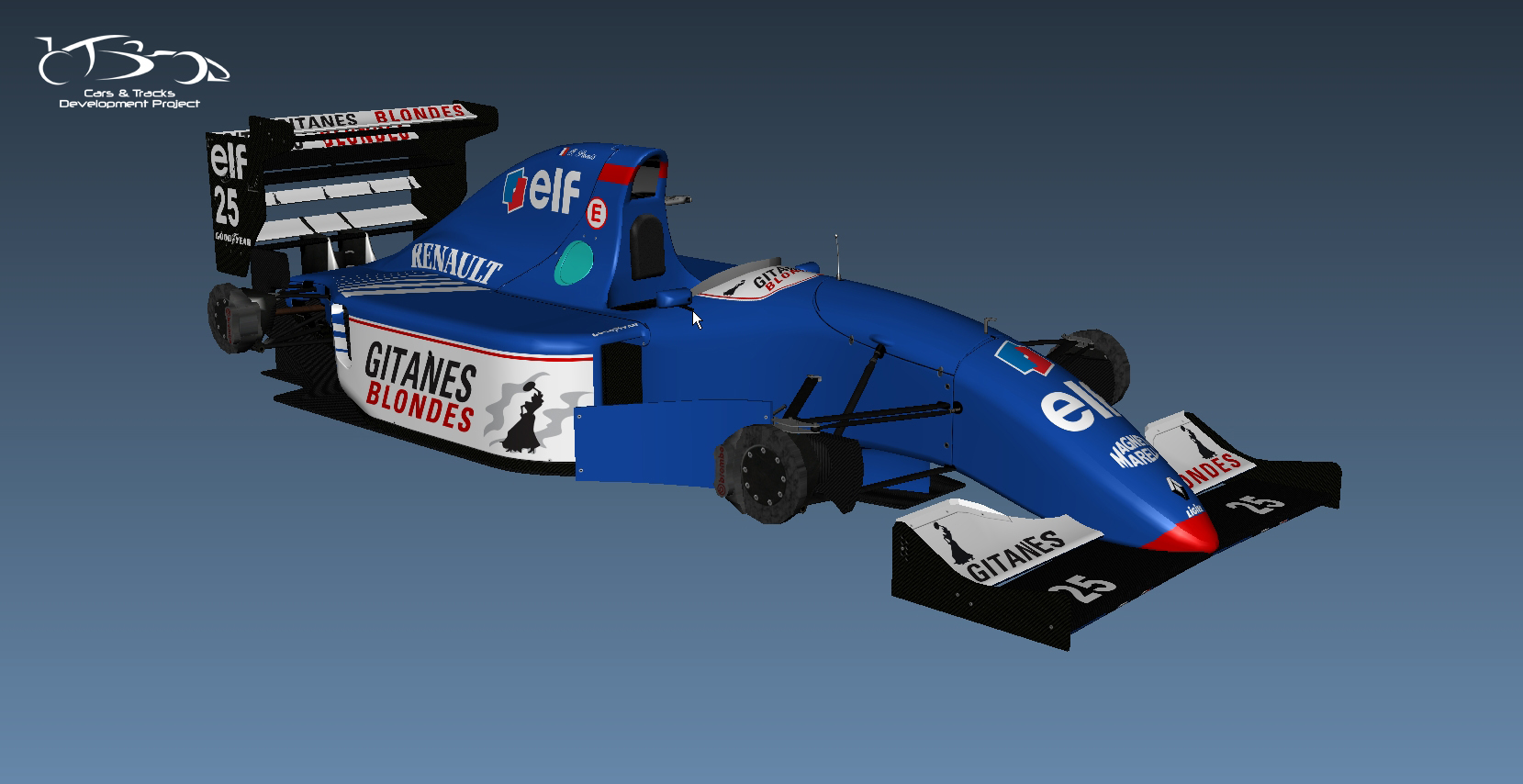
GP4: 1994 Ligier JS39B (Australian GP) WIP 2

In this blogpost, I'll do a walkaround some of the details of the 1994 car. Buried away in the Ligier museum, there are a few good detail shots of the car on my usual resource site http://www.gurneyflap.com/ligiermuseum.html


Ligier ran quite a small front wing endplate at the beginning of the season, but upgraded to quite a big endplate for the end of the season. I've put the wireframe on so that you can see there is quite bump half way down the endplate, I'm not quite sure why. The under side on the leading edge curves outwards, before directing the air to the inside of the front wheels on the trailing edge. So it's not quite as straight forward as I had initially thought, but I'm always pleased to add the detail onto my 3D model. The front wing is pretty basic, the main plane is raised in the centre section, a smoother version of their 1993 concept. The two white dots on the nose I'm not sure what they were for exactly, but again it's always nice to add a few details on when I spot them. 


The nose itself is an interesting shape and one where my version differs from my resources. The flat side does not go all the way to the tip of the nose, instead it is rounded for half the width of the front wing. It also sits higher than the early season resource models I've been referring to, and is actually not too dissimilar in height from the 1993 car which was slightly raised. I also added a hole at the trailing edge of the nose cone for the steering arm as per the real car. 


The front suspension is actually lifted from the 1994 Williams, just amended in position to fit this car. The brake duct is new, although I could not find any good shots of the brake ducts from the late season car, but I put on quite a generic one. The mounting points are different from the Williams, but quite straight forward on this car. For the front lower wishbone, I had to cut out a section of the monocoque, again in a similar way to the Williams. It's not very clear on this screenshot, but I've put quite a bit of detail into the section underneath the nose.


Ligier run a double pitot tube, one directly behind the other. The team added bargeboards mid-season, it's quite a simple rectangular shape, though it has a bit cut off for the suspension arm to pass through. There are also a couple of bumps on the monocoque to factor in, the one above the diagonal suspension arm, which I had to put a hole in as well, and there are two small bumps on top of the monocoque, in between the pitot tube and the aerial. For me, it's quite a fun challenge to get the normals working well with the flat side of the monocoque and the curved section along the top, which dissipates as you get towards the opening of the sidepod and the cockpit. You can see the curved bodyline at the sidepod opening which wasn't easy to get right. Actually, I departed from my normal method of doing body lines, simple having detached indents to save time and actually is slightly more effective.


The mirrors sit quite low on the Ligier, but when I modelled the rear wing elements, I realised it had a very small gap to see through. The Ligier had quite a large and rounded cockpit opening, particularly along the sides. It means much more of the driver body (taken from my 1995 Ferrari) and the seat is exposed. The dash and steering wheel mounts are all covered by the top of the monocoque, and though the rules threated to change this arrangement (in accidents heads were hitting the front of the cockpit), it didn't get fully implemented until 1995 (as far as I can tell). From the photos that I have, there was simply just a screen, or for the museum car most of the cockpit had been stripped. Other cars have done a generic dashboard model, but I've decided to follow the pictures and just have a small rectangular screen and one button for the fire extinguisher. The visor (coloured in black here) is also an upside down L shape, which has been a feature of Ligier cars in the early 90s.

Thursday, 10 October 2019

GP4: 1994 Ligier JS39B (Australian GP) WIP 1

For my next GP4 car from 1994, I've manage to complete the build in just a couple of weeks, partly down to some sick days I had, but I went for the Ligier due to its simplicity and a couple of other good references available to me. I thought the early season GP4 car by Mckey and Oggo was a good base, but needed updating to late season spec and could have done with some more details. 

I also found lying about on my old files a copy of the CTDP car to use as reference, again from the early season. It was optimised for F1C/rFactor so the scaling is a bit different, but it was a useful resource. 
CTDP 1994 Ligier JS39B
The 1994 car was a B spec version of the 1993 car, so the monocoque is pretty much identical with very few changes, and the one in GP4 is excellent too. 
RF900R, Adry77 & Oggo's 1993 Ligier JS39
GP4 1994 Mod (Mckey & Oggo)

So I thought, great, this should be easy and like the 1995 Ferrari, I had lots of references to follow. But then I started looking at some photos and realised it wasn't quite as simple as I had imagined. Apologies for the GP4 Builder shots, I don't have anything better to show preview shots in at the moment. 


As mentioned before in my blog, the rules were amended mid-season, and that led to a number of changes, as well as the usual in-season developments. The car was raised from the ground a bit to accommodate the plank, and if you played the GP4 1994 mod, you'll notice Mckey's car ran pretty low to the ground. The team introduced bargeboards, a new front wing endplate at the front of the car.


The engine cover had to incorporate holes as part of the rule changes, and the late season car also had an extra hump at the rear that was not present on the early season car. Like most the teams on the grid, they introduced new rear wing winglets by the rear wheels.


Moving to the rear of the car, the diffuser rules also changed, meaning that I couldn't use the other cars as a reference on that area. Ligier also removed the bodywork by the rear suspension, so a lot of the gearbox and rear suspension mountings are visible. On the rear wing, they curved the lower section and also introduced a straight wing in the middle too. So quite a lot of the rear of the car is new compared to the early season and 1993 car that I had references for.


I'm quite pleased with how this car ended up and all that is left is the mapping and the painting.
Coming up is a walkaround talking through some of the details I've put in and where almost every part of the car is different from the reference models I've used.

Tuesday, 9 July 2019

Updated 1/43 Model Review: 1994 Ligier JS39B Renault

Spark have released their 1994 Ligier JS39B and the first available is the Schumacher test car, so I had to get my own copy. After taking some shots, I've updated my original blog post.
https://fongugp4.blogspot.com/2019/01/143-model-review-1994-ligier-js39b.html

As with the McLaren update yesterday, I thought I would post some more shots of this model. 


Spark models come in a similar size to the Minichamps long box. The base is wooden as opposed to plastic, which gives it a nice weight, but does mean it slides around easier - not good if you stack models. The plastic case is nice, with rounded top edges. Once you remove the outer packaging, the whole car can be seen from any angle.


This is the late season model with the extra winglets by the rear wheel, the curved lower rear wing and the hole in the engine cover. I was pleasantly surprised when I got the model and reviewed it. Besides my usual gripes about the size of the tyres and the driver helmet, I think the rollover bar should be straighter vertically from front view, making the airbox a little more bulbous like the real car. The front wing looks a little blocky, and I think could be better refined. If I was really nitpicking, the upper rear wing element should be deeper whilst the middle element should be shallower. The other disappointment is that it has the early season diffuser. Despite these points, I still  like the model, it has nice details throughout, it would just be nice if it was slightly more refined.


I like the holes in the airbox and at the rear of the sidepods and the detail on the fuel cap is good too. Spark have managed to capture the curved cockpit sides. I also like how the mirrors are not bog standard ones, but made for this car. The driver figure is nicely defined too.


If you compare the original Minichamps suspension from yesterday's McLaren MP4/9 post, you can see how much more refined the Spark model is. The humps on the top of the monocoque and some of the detail of the rear of the car is really nice on this model.

I hope it won't be too long before we see Minichamps' version of this car and we have a rare opportunity to do a direct comparison.